Thursday, April 25, 2019

Two Towers, Two Episodes, Two Valid Adaptations of The Twilight Zone

(Alternately: Correcting Common Misconceptions about IP Application or Lack Thereof)

Based on the title, one might assume this post is about Florida Tower and DCA/Paris Tower.  Those are the two models of the ride based around The Twilight Zone after all.  This post is not about those Towers.

This is about Florida and Tokyo.

Now, there’s one frustrating accusation I’ve seen thrown towards the various Twilight Zone Towers: basically, that they do a crappy job of fitting with the IP, and that the supposed “lost episode” idea that the ride portrays would not fit with the actual show at all.  Meanwhile, I’ve seen Tokyo’s original-story version of the ride lauded as the “best” Tower, with a story designed just for the ride from the start with no IP concessions, and a morality tale that ironically fits in more with the Twilight Zone IP.

This doesn’t pop up overly often, and I’ve mentioned this issue in passing in other posts, but I figured it’s long past time I finally give this its own article.

Note that I’ll generally have Florida in mind as my example of a Twilight Zone Tower, given that it is the first and most elaborate iteration of that idea. 

I’ll also state again that I loved the story side of Tokyo’s Tower of Terror, just not the actual ride portion.  So don’t worry, this isn’t me hating on Tokyo, just correcting a frustrating assertion I’ve seen in the Tokyo vs. Twilight Zone debate.

That being said, let’s break this down by issue:

1. Does the Twilight Zone Tower not even fit with the series’ stories at all?

Absolutely yes!  I wouldn't be writing this if I agreed it didn't!

Of course, this requires some elaboration.  The Twilight Zone is famous not just as a science fiction anthology, but also as a series containing many morality tales.  Given that the Twilight Zone Tower is meant to represent another episode, this has left some fans scratching their heads and asking, “Where’s the moral?  What did the Five People in an Elevator and/or the guests do to invoke the wrath of a supernatural storm?”

In my post about experiential storytelling, I posited this interpretation:

"The Twilight Zone, in the eponymous show, is often (although not always) a realm of karmic punishment.  In the book Everything I Need to Know I Learned in the Twilight Zone by Mark Dawidziak, the author notes that people who take dares fare especially poorly in the Zone.  What was the marketing campaign heavily centered around?  "I took the dare!"  The pre-show video even states "We invite you if you dare to step aboard."  It's possible that, by taking the dare to enter the building and/or ride the elevator, our characters were getting their punishment for taking dares.  Likewise, our characters seemingly are poking around an abandoned and potentially dangerous tragic disaster site for no good reason, and thus being stupid and/or disrespectful--two other things that generally aren't rewarded in the Twilight Zone.


Of course, "this is happening because our characters were stupid jerks" is far from a satisfying explanation, and it stems from a knowledge of the ride's source material that the average rider may not have (and should not be required to have), so I won't posit my guess here as "canon".  Instead it's merely the best explanation I can offer.  Indiana Jones and the Temple of the Forbidden Eye sadly does use "the curse happens because your characters were stupid jerks" as its official story, so it wouldn't be completely out of character for Disney to use this plot device, however."

As you can see, I noted that this interpretation requires looking much deeper into the ride, marketing materials, and original show than the average rider might be expected to have.  It also places the guests in an “evil” role, which seems…somewhat rude, automatically assigning the “wrong” intentions to the guests no matter what.  However, even without a fan doing a deep dive into the lore (or having to be told they’re a jerk for riding the attraction), there is an easy explanation for how the Tower’s story absolutely fits into the show canon.

Not every Twilight Zone story is a morality tale.

Seriously, although there are quite a few episodes with morals and karmic justice, there are also quite a few where weird or tragic crap just… happens.  There is even a major example of this in one of the most famous episodes, “Time Enough at Last.”

For those of you who have not yet seen the episode, “Time Enough at Last” is about a man, Henry Bemis, who loves to read, but is prevented from doing so by his unpleasant boss and wife.  Then nuclear disaster hits the world, leaving Bemis the last person alive, but finally with time to read—only for his glasses to break, dooming him to walk the earth with horribly blurry vision and unable to do the one activity he might consider to make such a lonely existence worthwhile.

There’s no real moral to be had there (aside from perhaps the exceedingly mundane “always have spare glasses.”).  There’s certainly no karmic justice either; Bemis doesn’t seem to be a bad enough guy to deserve lifelong psychological torment, and the rest of the world just got nuked into oblivion.  Even Dawidziak’s book—a book dedicated to finding the morals of famous episodes—failed to find a message behind “Time Enough at Last”, besides, perhaps, “bad things sometimes happen to good people, and that can’t be avoided.”

Henry Bemis’ broken glasses are featured as Easter Eggs in the Twilight Zone Towers, and Imagineers viewed every episode of the original series when designing the ride.  It was no secret to the designers that faithfully adapting the licensed property did not necessitate going for a moral-based plot.

Interestingly enough, the series does have its share of ominous elevators (see the episode “22”, which got an Easter egg in DCA, for some especially familiar scenes), but none of them ever drop… until this “lost episode”.  The designers are almost making it a Chekov’s Gun.

So, for those concerned that the Twilight Zone Tower is an “unfaithful adaptation” for plot reasons, it is certainly not.  None of the Elevator Five needed to have done anything wrong to get cursed by that fateful lightning bolt, nor did the presumably hundreds of other people in the Hollywood Tower Hotel to get cursed by the lightning storm either.  The riders need not necessarily have any “good” reason to get subsequently cursed either.  The Zone isn’t always about karmic justice; sometimes, unfortunately, shit happens.

2. Is Tokyo’s storyline a flawless Twilight Zone-esque experience with a tighter plot than the Twilight Zone Tower?

Very much yes to the Twilight Zone comparison... but it requires some leaps of logic regarding why the guests get cursed.

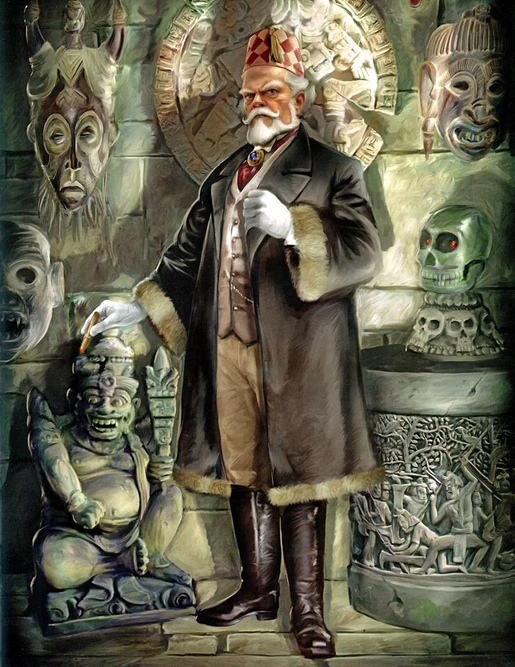
The basic summary is this: Harrison Hightower was a super rich, super egotistical ass who built a hotel in New York, the Hotel Hightower, basically as a monument to himself.  He spent his life traveling around the world to steal artifacts from other cultures and displayed his spoils in the Hightower.  He was such a jerk that he stole more than even the vast hotel could display; piles of treasure built up in the basement.  Then, one fateful day, he obtained the idol Shiriki Utundu, which cursed him, sending him plummeting to his doom down the elevator shaft, his pride preceding his literal fall.  His ghost is sentenced to keep reliving his horrible final moments.

The New York Historical Society couldn’t let such a magnificent hotel just be demolished, though, and started giving tours of the place.  Of course, things go rather wrong with the tour once guests take the elevator to see the upper floors…

Now, the morality story angle is PAINFULLY clear.  There’s also a really clear reason why Harrison is cursed and still haunting the place; it’s his karmic punishment.  The monument he built to his ego is now his prison.  It’s obvious why people who think that The Twilight Zone automatically equals “morality tale” would gravitate towards this storyline.

But…why are the guests cursed to also plummet in the elevator on their tour?  Does the Historical Society know the guests are in danger?

An answer to the first question might be “Shiriki Utundu is warning the guests not to follow in Harrison’s footsteps”, but that’s a guess.  A more cynical guess might be that the idol also thinks the guests are somehow like Hightower and thus deserve his same fate—or that Shiriki Utundu is just a jerk who likes cursing people.  As for the second question… all I have is more questions.  Are the tour guides super oblivious?  Are they indifferent to the idea that their tours are potentially dangerous?  Have they become somehow influenced by the curse, becoming agents of the malevolent force in the building the same way the Twilight Zone bellhops are?

Of course, the actual “curse” drops are so gentle it’s almost difficult to consider them as representing “danger”, so, just as a sarcastic guess here, maybe it was an intentional part of the tour all along?  Historians, especially those working around “haunted” historic sites, can have some dark senses of humor.

If a translation I found of the pre-show is correct, Tokyo might actually use the “don’t take the dare!”/”we’re cursed because we’re stupid” version of why the guests are cursed as actual canon.  In the pre-show, Hightower warns us to not fall victim to Shiriki Utundu’s curse like him, and to run away while we still can.  Of course, we continue our historical tour anyway, and subsequently end up cursed.  Even on a different continent and with a different storyline, we still took the dare.

Tokyo’s story answers a bit more about what’s going on (namely, why the initial ghost is haunting the elevator), but clearly there’s some head-scratchers left.

3.  So… should the Towers have swapped stories or something?

I’ve read praise for Tokyo’s Tower based on the fact that it’s one of the few new attractions to not prominently feature an IP.  However, like any good Twilight Zone story, there’s a twist.

There’s no need to swap stories… because the two hotels have been in the same continuity all along.

In Shanghai Disneyland, there’s a newspaper on a bulletin board that contains headlines both about a disaster at the Hollywood Tower Hotel and about the League of Adventurers finding the Temple of the Crystal Skull.  Obviously, the Hollywood Tower is the Twilight Zone Tower of Terror.  The Temple of the Crystal Skull is the setting for Tokyo DisneySea’s Indiana Jones ride, which is in the Lost River Delta.  Lots of Hightower’s artifacts are clearly marked as having come from Lost River Delta.  The Lost River Delta and the HTH, and therefore the Hotel Hightower and the Twilight Zone version, all are in the same continuity.  It’s all the same story.
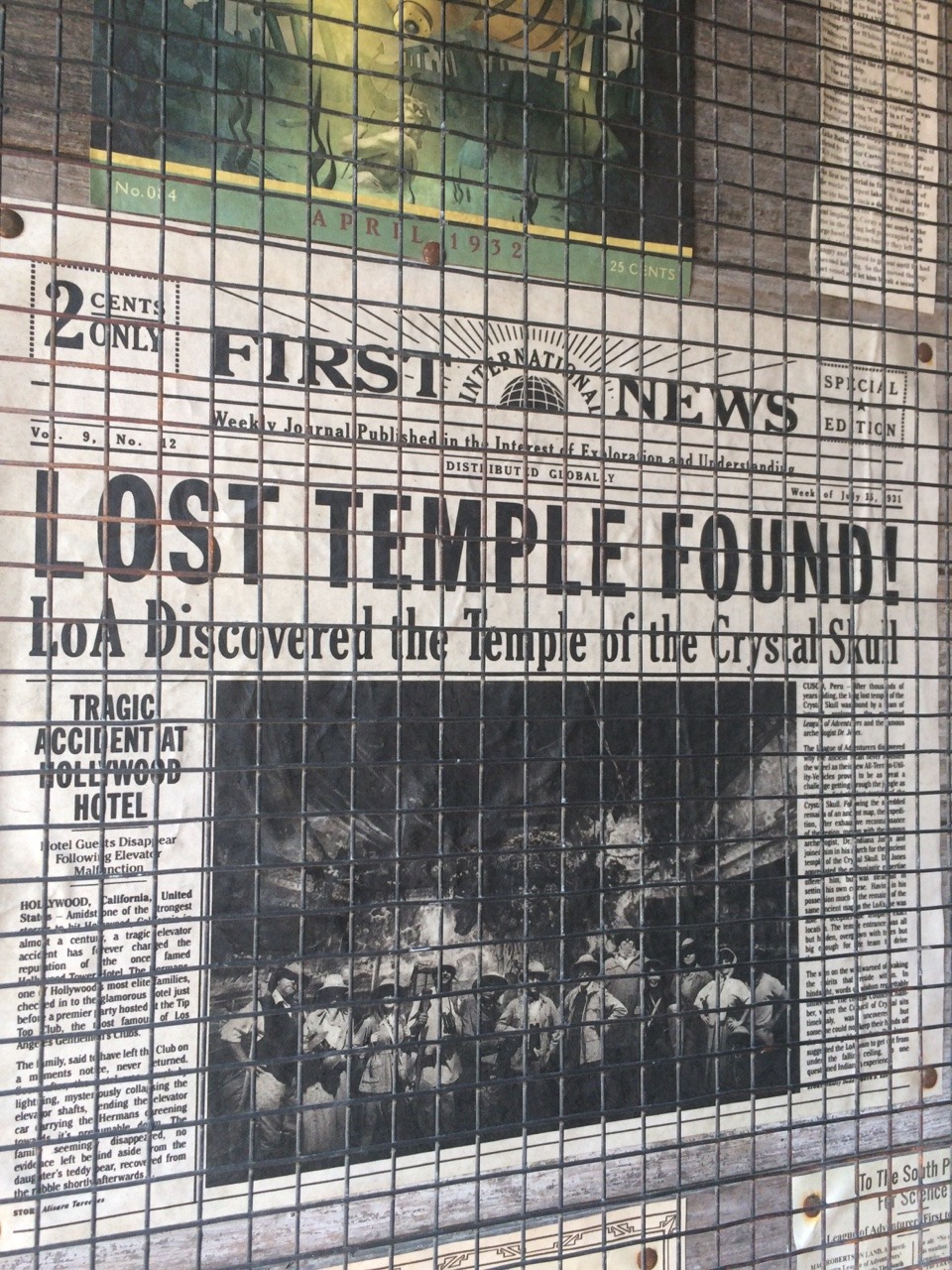
Here's the newspaper as proof.  Photo by Laffite'sLanding

Tokyo’s is still technically in the Twilight Zone, it just never says it.  It never needs to say it, both because good storytelling never needs a specific IP, and because the connections are there anyways for those who care to look.  Come on, isn’t it easy to envision Rod Serling giving some sharp commentary about Hightower while gesturing toward the idol in Hightower’s office?

Funny enough, having two “lost episodes” with the same gimmick would even fit with the actual Twilight Zone show continuity.  It had TWO episodes about ventriloquist dummies, and even used the same puppet for both!

On another note, the ultimate conclusion of all these connections means that building a 13-story hotel in the Disney Parks canon is just a really bad idea.

Friday, April 19, 2019

Drop Your Expectations: A Review of Tokyo DisneySea’s Tower of Disappointment


The second I arrived at DisneySea, I went straight for the Tower of Terror.  Not only was it the only incarnation of my favorite ride that I hadn’t ridden yet, but it had quite the hype built up for it.  I’d heard endless praise for its original story and beautiful design, and even heard a few essays (both written and video-based) on how this was the “best Tower” and the shining example of the ride.

I knew not to go in expecting the “best ride ever” because, quite frankly, no attraction can ever live up to hype of that level.  I knew it used the same ride system as DCA and Paris so I went in expecting something of at least that level of fun.  As I explored the exterior and went through the queue and pre-show, everything seemed to be going according to expectation.  A dense story fans can really sink into?  Beautifully detailed sets?  Fun Easter eggs connecting to other properties?  All check!

But then I rode the ride.

And holy crap, was that a MASSIVE letdown.  And not in the way a drop tower is SUPPOSED to make you plummet.

There’s no gentle way to put this, but Tokyo’s drop set is EMBARASSINGLY tame.  I’ve had many regular rides on actual elevators that were more eventful.  The elevator at my hotel gave me just as much airtime.  It’s gentle enough to be a child’s ride.  All of that epic suspense and meaty story build up to a whole lot of NOTHING.  If the drops are supposed to represent Harrison Hightower’s punishment, I assume his punishment is being bored to death while being gently lifted and lowered in an elevator.

At first I wondered if the more restrictive restraints on Tokyo’s version dampened the experience, but I did a test that proved otherwise.  I wear a lanyard to the parks to keep my tickets and fastpasses handy, and I know that on any other Tower I have to remove the lanyard if I don’t want it flying up into my face during the ride.  On Tokyo’s, I left the lanyard on and not restricted by the seatbelt—and it barely lifted off my chest.  Tokyo’s is without a doubt a slower, gentler drop sequence.

Tokyo seems to forget the “thrill ride” half of a highly themed thrill ride experience.  The observable and experiential stories both build up and intertwine to promise an intense finale for guests, and it utterly fails to deliver.  I wrote down notes on my initial impression upon exiting the ride for the first time, and honestly, I felt almost pranked.  All this praise from the fan community, and all this intense story buildup in the attraction itself, for a ride that apparently forgets its ride portion.  Which is, you know, a rather important part of the equation.  Did some of those essayists even ride this?

I know an easy counterargument to this is “But Haunted Mansion provides chills and thrills while going at a walking pace!”  However, there are a few reasons Haunted Mansion doesn’t disappoint.  Mansion doesn’t advertise its ride system upon first look at the exterior.  Once we’re inside, we’re promised a haunted tour, and we get a haunted tour, in beautiful theatrical detail.  Tower, in all its versions, advertises its ride system right on its front; we see the drop shafts from the open doors.  This sets up certain expectations.  Upon entering the ride, we’re promised something of a tour through a haunted hotel, AND promised to re-live the terrifying elevator-dropping circumstances that led to the haunting.

Tokyo’s Tower of Terror only delivers on the “haunted hotel tour” portion of the expectations it sets, and it does that rather well.  Indeed, if the whole thing were set up as a Haunted Mansion or Mystic Manor type attraction, with focus on the show scene and story elements rather than trying to shoehorn in a thrill ride, I probably wouldn’t feel disappointed at all, and would be endlessly praising it instead.

I also should note that someone else in my party initially mistook the Hotel Hightower for being Harrison’s mansion rather than a hotel (…despite the obvious hotel elements… and the sign on the front of the building…), which I can’t help but feel underscores how the story might actually suit a Mansion type ride better.

I also initially wondered if maybe the ride was toned down because, obviously, Tokyo DisneySea was built for Japanese audiences, and maybe intense thrill rides aren’t so popular there.  But then I rode Journey to the Center of the Earth, Indiana Jones and the Crystal Skull, and Thunder Dolphin (the coaster at the nearby Tokyo Dome City park), which were all every bit as intense (and popular) as anything else I’ve ever been on.  Clearly the Tokyo area has a healthy appreciation for thrill rides.

I realized that my disappointment felt awfully familiar.  It was entirely parallel, yet almost opposite, to my feelings towards Mission Breakout.  Mission Breakout has extremely intense and thrilling elevator motions, sometimes to the point of being nauseating, but utterly fails to deliver any kind of satisfying story or beautiful design.  The Hotel Hightower and the Collector’s Fortress are dark reflections of each other: the beautiful and the ugly, the well-written and the thrown-together, the too tame and the too intense.

Both are equally missing a vital part of what makes a highly themed thrill attraction feel complete: the thrill in Tokyo, and the theme in Breakout.

And, I can’t help but notice, but both of these Towers are generally credited to Joe Rhode.  Maybe the moral of the story is to just not let Joe Rhode design your Tower?

This also applies in-universe.

Now, to make it entirely clear, I don’t hate the DisneySea Tower.  It’s such a beautiful building, with such artistry put into the story, small details, and creating suspense, that I can’t help but like it.  It’s an art piece, every bit as much as Florida Tower, the Haunted Mansions, and the Indiana Jones rides are.  However, failing to provide an appropriate payoff for all that wonderful setup is an especially glaring weakness.  If it had a drop sequence at least equivalent to DCA, I’d probably rank it as my second favorite Tower after Florida, but, unfortunately, as it stands it’s easily the weakest version not named “Mission Breakout”.

Wednesday, March 27, 2019

Masterpost: Alternate Tower Spotlight--Paris Tower of Terror

Want to know more about the DCA Tower's not-quite-twin in Paris?  Well, here's a good start!  This Alternate Tower Spotlight gives a half-walkthrough, half-compare/contrast look at the Paris Tower, featuring photography by Pyrokenesis, videos, ride narration transcripts, and more!

Photo by Pyrokenesis

Part 1: History, Hotel Grounds, and Building Exterior
Part 2: Exterior Queue and Lobby Show Scenes
Part 3: Lobby, Waiting Areas, Library, and Pre-Show
Part 4: Boiler Room, Ride, Exit, and Gift Shop

BONUS:  Hallway Scene Source Video and DCA/Paris Development

(Also yes, wow, this masterpost was way overdue)

Monday, January 28, 2019

Alternate Tower Spotlight: The Florida Tower of Terror--The Ride!

About time I finally got to this, isn't it?

---

Inside the elevator, ready for launch, June 28, 2017

"You are the passengers on a most uncommon elevator, about to ascend into your very own episode of... The Twilight Zone," echoed Rod Serling's narration as the elevator began to ascend.  Unlike DCA and Paris' later approach, Florida's ride made a point of beginning the ride by behaving like a normal elevator.  Rod Serling, as in the pre-show, was voiced by Mark Silverman.  At this point, sharp-eyed guests might notice the elevator permit on the lower left side of the lift carriage's wall, signed, as always, by a certain Mr. Cadawaller.

The permit, July 3, 2017

Just as that opening sentence ended, the ride car doors opened to reveal a tan hotel hallway.  At the end of the hallway was a wall with an arch-shaped window, with two small framed artworks (whether photos or paintings, it was impossible to tell from the distance) on either side of it.  Two potted plants framed an archway that had an elaborate swirled design stenciled around the top.  Hidden in the center of the swirled design was a camera.

Screenshot from this video by SoCalAttractions360


Lightning flashed and illuminated the hallway, and also served as a flash for the hidden camera.  The five neon blue ghosts of the unfortunate passengers appeared in a Pepper's ghost effect, the little girl singing an eerie version of "It's raining, it's pouring."  Lightning arced between their arms, before they seemed to absorb into the walls of the hallway with another flash, electricity crackling back toward the rear window.


Screenshots from this video by SoCalAttractions360


Another lightning crash illuminated just the rear window as the hallway melted away into a black starfield. Eventually, only the window was left, floating and tilting in the great void, surrounded by stars. 


Screenshots from this video by SoCalAttractions360


I feel the need to note here that this effect was apparently done with projection on a scrim rather than DCA and Paris' later use of a screen.  This allowed Florida's starfield to have much greater depth, and to have the window feel like it was truly floating in the void due to having "stars" behind it as well as surrounding and in front.  The difference is difficult to pick out in photos or video, but in person it is very clear that the original Tower included this extra detail.

As it floated, the arched hotel window transformed into the black and white window from the pre-show, before loudly shattering.  No narration occurred to attempt to explain this event, simply leaving riders in suspense. 

The window shattering.  Screenshot from this video by SoCalAttractions360


The elevator doors closed and the car continued its slow ascent.

At this point, it was fun to pick out what other riders in the car had ridden DCA or Paris before.  Anyone familiar with those Towers obviously braced for a drop after the hallway scene; I even caught myself bracing for it at one point.

The narration continued, "One stormy night long ago, five people stepped through the door of an elevator and into a nightmare."  Here the elevator doors opened to reveal a dark, vaguely industrial hallway slightly reminiscent of the boiler room, but with mirrored-looking walls.

Screenshot from this video by SoCalAttractions360

"That door is opening once again, and this time, it's opening for you."

At this point, the elevator dropped all pretense of being normal, and began moving forward.  As the car left the elevator shaft, the hallway likewise transformed.  No longer a normal industrial hallway (possibly some kind of maintenance level?), a lighting change revealed the bright, jumbled, electric blue dreamscape of the 5th dimension, previously hidden behind 2-way mirrors.  This included unnaturally angled architecture, ghostly figures of the Elevator Five, and imagery from the Twilight Zone opening sequence, such as the E=mc^2, the ticking clock, and the shattering window.  The mysterious portal within the hotel had finally opened.  In the earlier years of operation, this eeriness was enhanced even more by having a fog machine, but by 2017 that had been long discontinued due to its apparent interference with the ride's operation.

Ticking clock and weird architecture.  Screenshot from this video by SoCalAttractions360
The eye, a ghostly bellhop figure, weird architecture, and the E=MC^2.  Screenshot from this video by SoCalAttractions360


As the ride vehicle passed by the giant floating eyeball from the opening sequence, the eye blinked to show the guests a photo of themselves from earlier, taken from that hidden camera in the hallway scene.  I've seen some sources claim that this effect hasn't worked for many years, with the eyeball showing a stock photo of an elevator instead.  As of 2017, one drop shaft's eye effect was definitely working; I believe it was the elevator that loaded from the left area of the boiler room.  The other loading area's elevators showed a stock elevator photo.

The end of the 5th dimension hallway appeared to be yet another starfield.  As the car approached it, guests could see one set of boiler room elevator doors, complete with dial, situated sideways on the wall.  This set piece was not emphasized in any way, and could easily be mistaken for just industrial gauges if one wasn't paying attention.

The eyeball showing the elevator photo, the sideways boiler room doors, and the starfield.  Note that the video that I've taken most of these screenshots from seems to have been filmed from the right shaft, while this screenshot is from a video filmed on the left, hence why the eyeball is suddenly on the other side of the car.  Screenshot from this video by SoCalAttractions360

I've read some claims that the 5th dimension scene is supposed to represent an "upward view" of the elevator shaft based on this detail, but I feel confident in asserting that this is false.  The sideways door just adds to the surreal nature of the scene.  All of the imagery in the 5th Dimension scene is a callback to things previously presented in the ride--the pre-show imagery, the ghosts, and the boiler room elevator doors.  Furthermore, the doors and dial are those seen on the outside of the elevator as guests load, not those that we see on the inside in the shaft.

As the elevator entered the starfield, the stars consolidated in a central point in front of the elevator.  If one boarded from the right side of the boiler room, the stars briefly formed the shape of a Mickey Mouse head silhouette, making it a Hidden Mickey.  With a sharp, vaguely electric noise, the central light turned into two parallel lines that split apart as the doors opened.

The starfield consolidating
Splitting parallel lines.  Screenshots from this video by SoCalAttractions360


Guests could feel the humid Florida air as their car locked into the drop shaft carriage.  In Florida's design, the show scenes were entirely in one (relatively) normal elevator shaft, while the drops took place in a second specialized shaft, connected via the 5th Dimension scene.

The car situated itself for the drop sequence in complete darkness, as the narration echoed out:

"You are about to discover what lies beyond the 5th dimension... beyond the deepest, darkest corner of the imagination... in the Tower of Terror."

With that epic title drop (heh), the elevator alternately plummeted or skyrocketed guests into the epic drop sequence.  Unlike DCA and Paris' set routines, Florida had multiple sequences that were randomized.  Each had different drops as well as effects and scenes within the drop shafts.  Notably, some routines began by shooting guests upwards to begin the sequence!

Marvin's Vids gives a good rundown of the elevator motions for each different sequence at 58:08 in this video: https://vimeo.com/10428903

Regarding the different effects and scenes, I've yet to see a comprehensive list of them.  I'm not even sure what all of them potentially are; even with riding Florida Tower dozens (or possibly more than dozens...) of times for this project, I didn't get all of the ride sequences I know exist.  Still, the ones that I'm aware of are:

-Doors opening at the top, once with a ride photo and once near the end for the final drop.  This happens for every drop sequence, and the view from the top is obviously one of the big draws for the attraction.

The top of the drop shaft/camera stop.  Note how the sign overlaps the door opening, unlike in other designs.  Screenshots from my own video, filmed July 2, 2017

-Mannequin scene.  A freaky space that might represent some kind of storage area, and had an open-seeming sheet metal rear wall.  Its main feature was a ghostly looking mannequin of indeterminate gender, draped in flowy cloth.  Generally, if the elevator paused at this scene, wind would blow the cloth around as a strobe light flashed, to disconcerting effect.

This seems to be the most difficult scene to film even with lowlight cameras.  Filmed versions really don't do it justice; this video from LMG vids gave the clearest view I could find


-Lightning crackling along the shaft as the car traveled upwards or downwards.

Drop shaft lightning, from this video by SharpProductions


-Shattering window.  The car would briefly pause at the bottom screen, to see the pre-show window shatter before rocketing upwards again.

A glimpse of the shattering window from this video by SharpProductions


-Elevator Five.  The same as the shattering window, but instead featuring another vision of the ghosts with electricity crackling between them.

Drop shaft ghosts, screenshot from my own video filmed July 2, 2017


If anyone else knows of any other drop shaft effects, please let me know (preferably with proof)!

Another notable aspect of the Florida Tower's ride sequence was how much of it took place in total darkness.  Aside from the effects stops or crackling lightning, all the action took place in a featureless void.  This made the experience all the more disorienting, especially with the occasional weightlessness from the drops!  It also demonstrated an entirely different approach between Florida and later incarnations of the ride.  Florida's dark disorientation gave the distinct horror of being hurled through an unknown dimension, while DCA/Paris' occasionally-lit shafts with visible doors instead provided the more grounded horror of being dropped by a possessed, but still definitively recognizable, elevator.

Update: After years of wondering, here's a thorough explanation of the drop sequences here!

After one last big plummet down the full length of the drop shaft, guests found themselves at the bottom screen, faced with a giant version of the Twilight Zone spiral from the show's opening sequence as the show's theme song played.  In a reverse of the pre-show opening, the objects such as the door, window, and eyeball receded back into the spiral, as the car likewise pulled backwards away from the screen.  Finally, Rod Serling appeared again, just before the screen "turned off" with a zap of static like the pre-show TV.  At this, a set of elevator doors closed, lights slowly turned on, and guests found their elevators in a storage area.

Ending Spiral
Pre-show objects floating back into the spiral
Rod Serling making one last appearance
Ending static
Note: Ending screenshots from my video filmed July 2, 2017.

In this storage area was a wide variety of props, including Easter Eggs from the show.  These included a ventriloquist dummy, referencing either "The Dummy" or "Caesar and Me" (yes, The Twilight Zone  had two ventriloquist episodes), in one side's exit, and the slot machine from "The Fever" in the other side's exit.  A radio resembling the one from "Static" also seemed to be among the junk in the room.

Ending area with the ventriloquist dummy (seen at right), from this video by LMG Vids
(if anyone has a clear photo or screenshot showing the slot machine, please let me know!)

"A warm welcome back to those of you who made it, and a friendly word of warning, something you won't find in any guidebook," the narration continued as the car continued to pull back, and then rotate toward the unload door.

Rotating to unload, from this video by LMG Vids


"The next time you check in to a deserted hotel on the dark side of Hollywood, make sure you know just what kind of vacancy you're filling, or you may find yourself a permanent resident... the Twilight Zone."

With those words and one last dramatic music cue, the ride car pulled up to unload.

"Ladies and Gentlemen, please gather your belongings and watch your step as you exit through the elevator doors.  We trust your stay at the Hollywood Tower Hotel has been a pleasant one.  And please, do come back and see us again!  Thank you," the ghostly announcer recited as the doors opened and the seatbelts unlocked to allow guests to unload.

---
For those wishing for a video experience of the ride sequence, I recommend the videos I used for screenshots.  I filmed one of my own ridethroughs in 2017, but since I did not have a lowlight camera at the time only certain parts of the video actually turned out well, which I used as screenshots here.

Sunday, December 30, 2018

The Sweet, Soothing Blue of the Supernatural: Color as a Storytelling Tool in the Tower of Terror

A big reason that Tower of Terror, especially the original in Florida, remains my favorite Disney ride is because of the (apparently) extreme amount of care that went into making such a detailed attraction.  This extends even to the careful use of color throughout the experience.  The color palette throughout the ride changes to accompany shifts in tone as well as the level of supernatural apparent in the setting.  This is most pronounced in the original Twilight Zone Tower of Terror.


The daytime outer color palette of the Florida Tower is overwhelmingly pink, tan, and brown.  This generally extends through the outer queue (barring the green plants, obviously), and continues into the lobby.


 The lobby is overwhelmingly brown and red, to the point that it almost looks like a sepia filter in real life.  Notably, this is when, story-wise, the hotel is only rumored to be cursed or haunted; we're poking around an abandoned property with no confirmed ghosts yet.  The "real" world is thus presented in warm neutral tones.  What non-plant features are notably NOT warm neutral tones in this area?  The "Hollywood Tower Hotel" sign by the entrance gate, which periodically switches to say "Tower of Terror", and a sundial with the Twilight Zone logo emblazoned on it.


In other words, the two hints at the forthcoming supernatural elements are the ones that stand out from the color palette.

The first hint of the supernatural in the experience comes in the library, in the form of the pre-show.  Although the presentation of the television's sudden video playback has varied throughout the years, as of 2017 the presentation implied that the TV could have turned itself on due to a brief power surge from the storm in addition to any supernatural explanation.  The cool silver black-and-white contrasts with the warm browns and reds of the library, but isn't exactly in the opposite realm of blue tones.  The supernatural is sneaking in, but isn't fully established.

The boiler room, with its brick walls, returns to the overwhelming red/"real world" color palette.


We seem to be safe for now... but then comes the elevator ride.

The first stop is the hallway scene, where the supernatural finally gets confirmed in the form of bright glowing blue ghosts, with equally blue cursed lightning flowing between them.  The warm tan real-world hallway melts away to reveal cool black-and-white supernatural space.

Screenshot from this video by SoCalAttractions360

The next hallway, the 5th Dimension Scene, finally brings the "supernatural" palette to the forefront.  Now that we're in the actual Twilight Zone, everything is shades of bright blue, or else icy black and white.  There's not a trace of the warm, comforting real world left.

Screenshot from this video by SoCalAttractions360

This jarring, unnaturally blue palette continues through the drop sequence, with lightning arcing and the blue ghosts taunting the guests through their free-fall journey.  The only time the supernatural-blue palette isn't present is when the doors open to show the view from the top of the drop shaft.  Guests get to see the real world for a second, but from an uncomfortable height and with the distinct feeling of being helplessly trapped.

The finale video, almost a repeat of the pre-show's opening in reverse, is once again in black and white, and once again transitions us between the bright blue supernatural world to the neutral pink/red real world.  The car pulls back into a storage room, and the guests exit the elevator into more neutrally toned halls reminiscent of the boiler room.  However, the walls are now a bit greyer, with concrete in addition to the brick.  The palette is just a little bit colder, a little bit harder to shake away from the supernatural.

The elevator pulling back into unload.  The palette is warmer, but note how the walls are still a cooler grey.  As the car pulls back into the real world, it also pulls back into warmer color tones.  Screenshot from this video by SoCalAttractions360

The fully red palette returns with the exit gift shop, as we transition back completely into the "real" world.

DCA and Paris had to tell their same Twilight Zone story in a much more limited space, with a much faster pace.  Despite the change in storytelling spacing and timing, the color palette symbolism remained very much in place, albeit adjusted to fit the new pace.

The warm tan buildings are notably topped by turquoise domes, and scarred by bright purple burn marks.  Those purple burn marks not only serve to make the buildings more acceptably unrealistic in a design that debuted post-9/11, but also to immediately establish the presence of the supernatural.

Paris Tower; photo by Pyrokenesis

DCA Tower

This "warm reality with sneaking cold supernatural" theme continues into the lobbies, which now include more variety of color (especially blue and green) than their original Floridian counterpart.

Paris; photo by Pyrokenesis
DCA


At DCA, at least, the presentation of the pre-show was also more obviously supernatural; the storm causes a power outage rather than a surge, thus making the television definitely haunted.

The boiler rooms continue the haunted feel of the pre-show's presentation, being cold grey industrial rooms with distinct glowing blue lighting.  The place is established as definitely "wrong" and supernatural in the wake of the pre-show.

Paris; photo by Pyrokenesis
DCA


At first the elevator, with its normal neutral tones, seems a potential lift to the salvation of the real world, only to immediately turn into the black and white space as we're pulled back into the Twilight Zone.  The first stop initially shows us the comfort of a normal tan elevator stop with a mirror, only for a lightning strike to turn everything, including our own reflections, into a bright glowing turquoise. 

DCA Tower; screenshot from this video by SharpProductions


The second stop once again teases the guests with a neutral tan hallway, only to confront them with electric blue ghosts that send the elevator plummeting.

DCA Tower; screenshot from this video by SharpProductions


What in Florida is a slow, sneaky, atmospheric trap of falling into the supernatural (a slow pink/red to blue fade) becomes a breakneck cat-and-mouse game at DCA and Paris, with the guests thinking they've found safety only to have the Twilight Zone come snapping at their heels (as neutral tan colors are jarringly interrupted by glowing blues and purples).

While I have not ridden Tokyo's not-officially-Twilight-Zone version yet, something of this color-based storytelling seems to have survived, albeit with yet another alteration.  Rather than being red/blue, the dichotomy is red/green.  As part of the nighttime effects, the red brick exterior gets illuminated by the lightning arcing from the cursed idol's green eyes-- the same green eyes which also curse the guests in the mirror and even receive special notice in the ride's narration!

(Note: the following Tokyo photos are screenshots from this video by Attractions Magazine)

Exterior
The Pre-Show
Hallway Scene
Mirror Scene


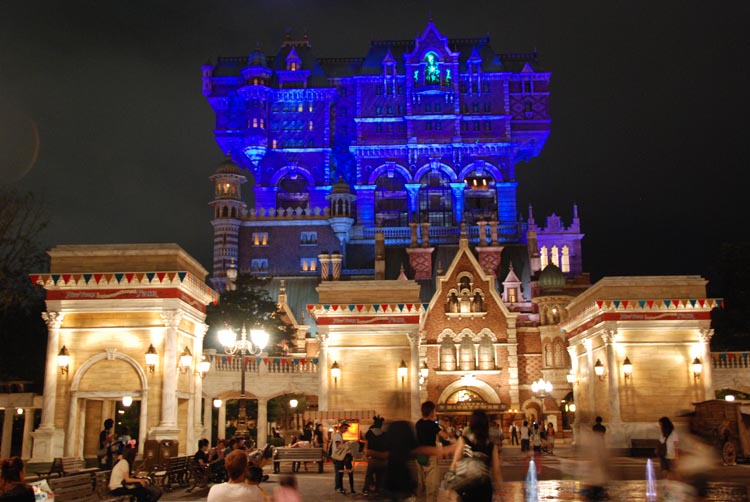
Of course, the Tower gets even spookier at night.  And what's the lighting scheme?  Either bright blue, or bright blue-purple, even in Tokyo!  Florida's sign even adds the extra touch of having that cool-green border around the letters of "Hollywood Tower", while Tokyo has the green glow from the idol in the top window.

DCA
Paris

Florida

Tokyo; photo from Theme Park Review


It's clear that much care went into designing the details of the Tower of Terror attractions.  Even though guests may not even notice it on the first few rides, the shifts in color fulfill a major role in telling the story and building the atmosphere.  This kind of attention to detail is essential to a complete themed attraction experience.